DTG Diamond Rendering Technology: Achieving Photorealistic Visualization in Luxury E-Commerce

Luxury e-commerce depends heavily on visual credibility. In jewelry e-commerce especially, customers evaluate brilliance, material quality, and craftsmanship primarily through digital product visualization. When a diamond appears flat, artificial, or poorly rendered online, perceived product value decreases.
At the same time, expectations in luxury e-commerce have shifted beyond product images. Buyers now expect interactive experiences, real-time customization, and the ability to closely inspect luxury products before purchase. As a result, high-fidelity visualization has become a key factor in how luxury brands communicate trust, quality, and premium positioning in digital commerce.
And because this challenge is particularly visible in categories such as diamonds, our team at Digital Tails Group has addressed the limitations of standard rendering approaches by developing high-fidelity diamond rendering architecture for configuration-driven luxury product experiences.
Why standard e-commerce visualization falls short
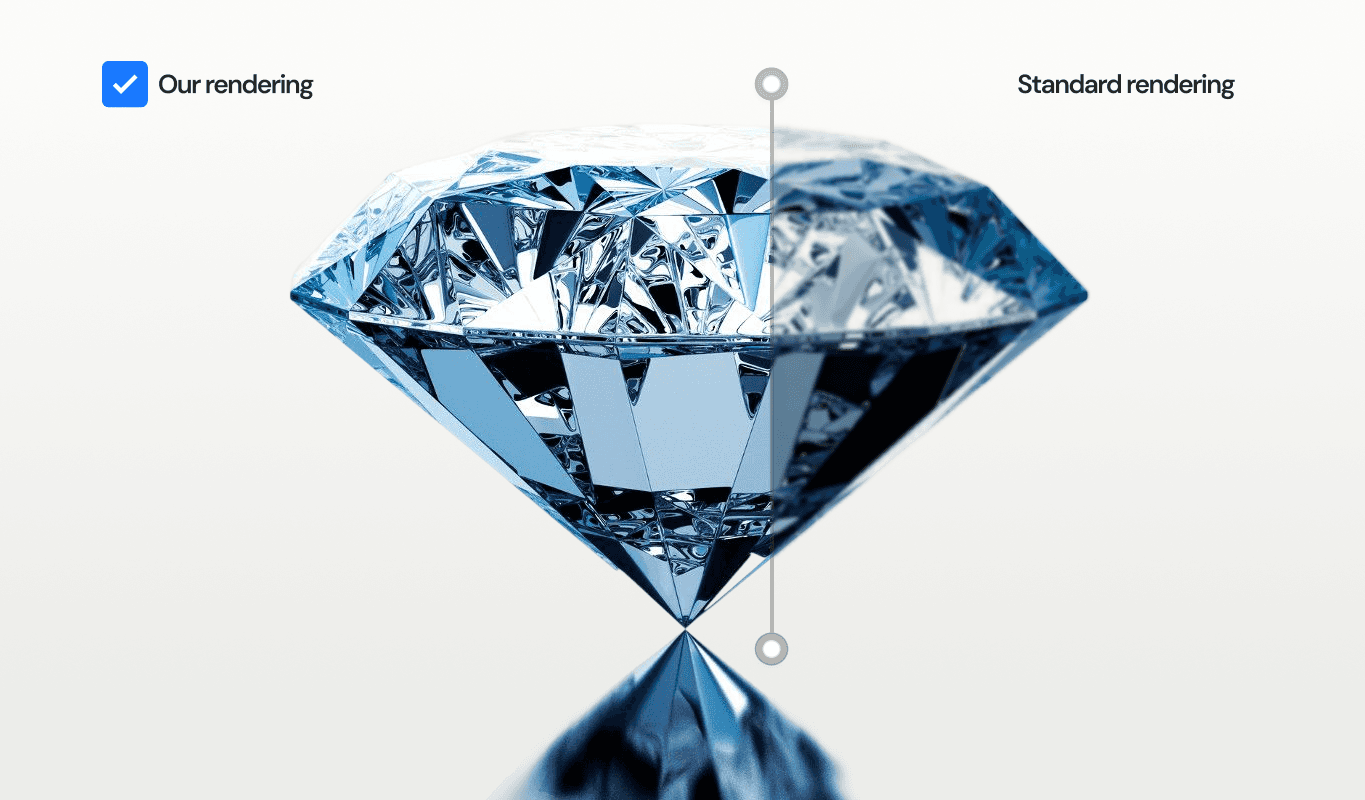
Standard rendering systems treat diamonds as generic transparent materials, which reduces them to surface-level optical behavior. In practice, it removes the structured way light actually behaves inside a faceted stone.
A diamond is defined by internal light transport rather than surface appearance. Light enters, splits across multiple facets, refracts at different angles, and accumulates visual effects through repeated internal interactions. These processes are interdependent and cannot be accurately represented with simplified transparency or standard shading models. When this internal structure is approximated, the material loses its defining characteristics – not just in terms of realism, but in how its visual complexity communicates value.
It’s a specific problem that requires a different rendering approach: one that treats the diamond not as a surface object, but as an internal optical system governed by controlled light propagation across geometry.
High-end visualization as business architecture for conversion
In luxury businesses product visualization functions as core business infrastructure that directly influences how products are evaluated and sold. In jewelry retail specifically, purchasing decisions are shaped by how clearly material quality, craftsmanship, and detail are communicated visually. Buyers assess high-value products critically, and when visual output is inconsistent or fails to preserve material behavior under interaction, perceived product credibility decreases, even when the underlying product remains unchanged.
Jewelers understand that this makes visualization a performance-critical layer of the e-commerce stack. It determines how reliably products can be presented across catalogs, how consistently they behave across different digital touchpoints, and how effectively they support conversion in high-consideration purchases.
"
From a brand perspective, visual fidelity is not a technical detail but a commercial requirement. It directly shapes customers’ perception of value, and in luxury retail that perception defines the entire purchasing decision.

Petra Palusova
Chief Strategy Officer at Digital Tails Group
Use of high-fidelity diamond shader in 3D configurators
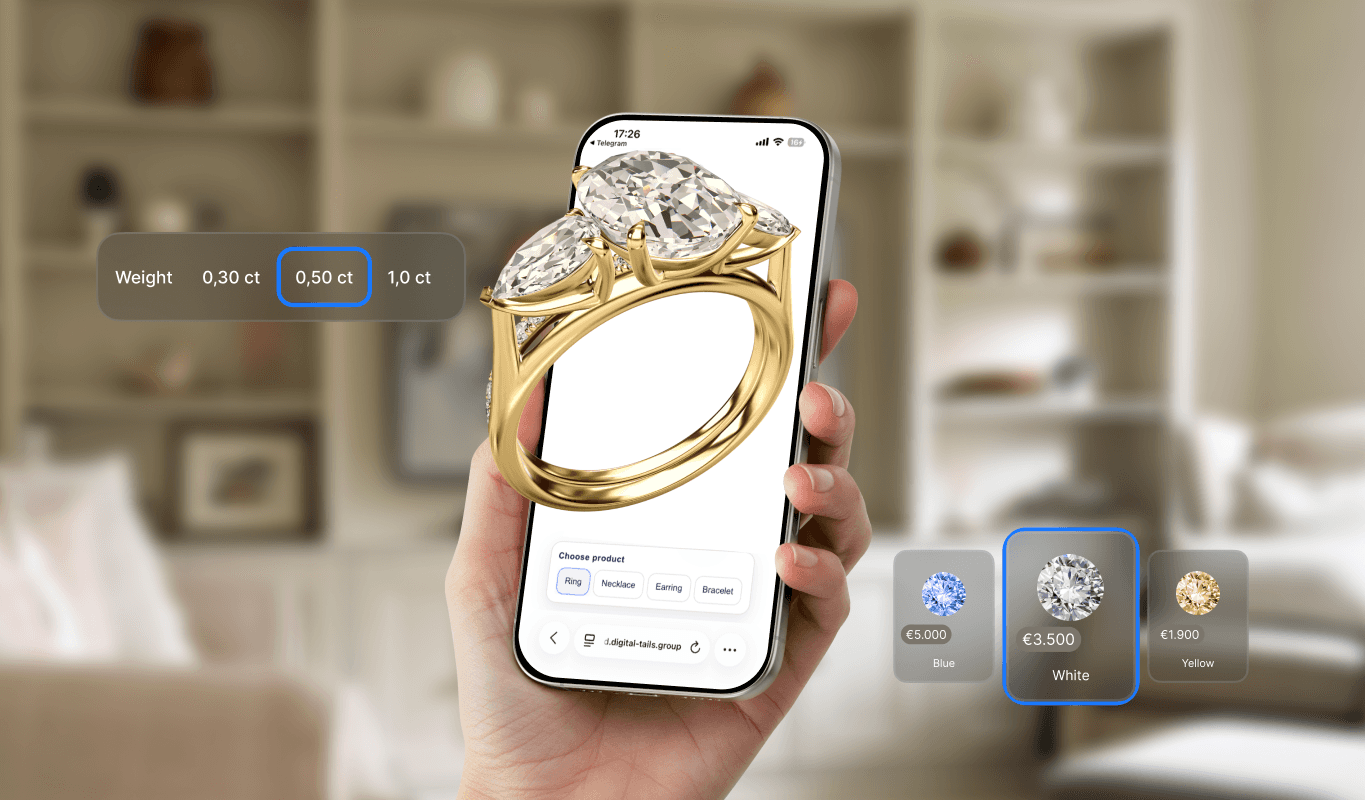
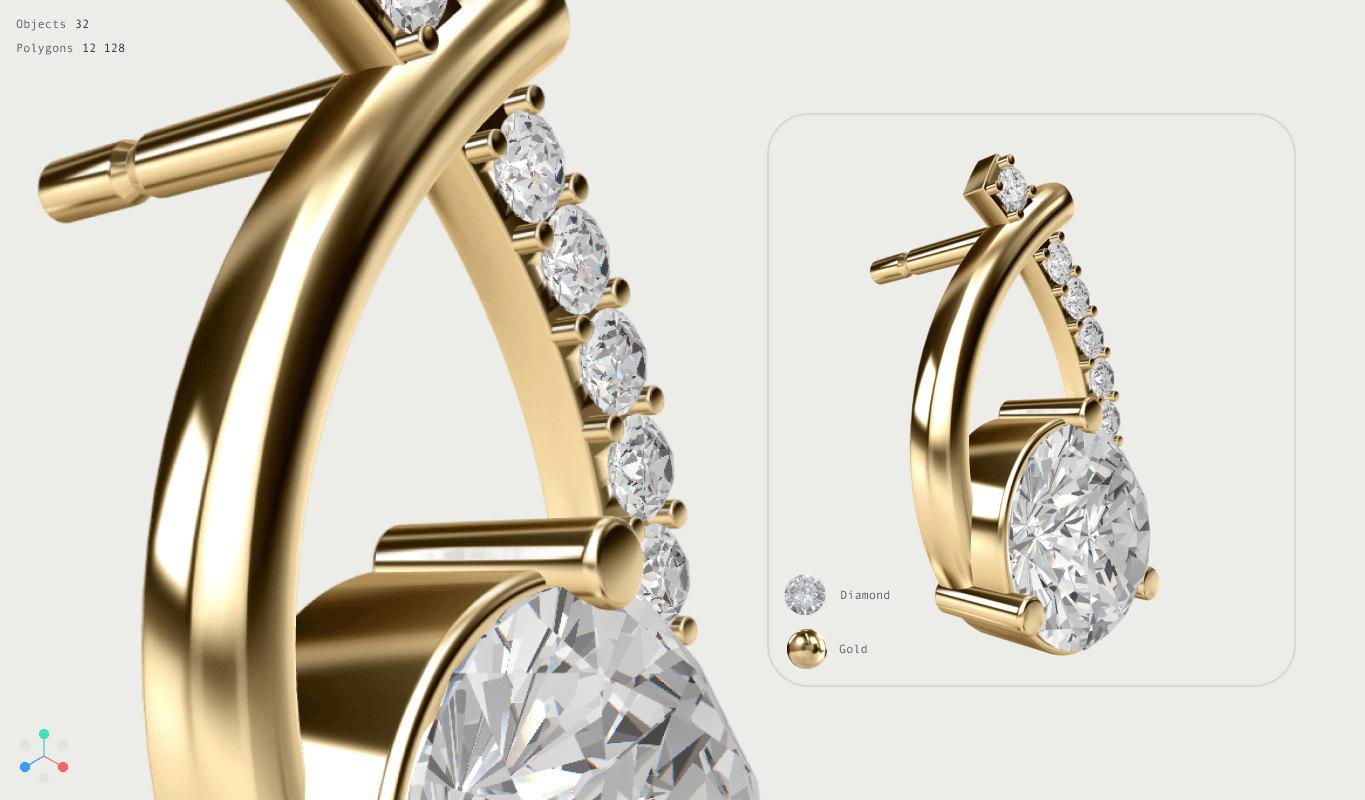
The high-fidelity diamond shader is used to preserve consistent visual behavior of gemstones in our 3D configurators. Upon rotation, zoom, comparison, or customization, the diamond continues to behave as a coherent optical object across changing conditions.
The shader addresses three critical requirements:

When these conditions are not met, the diamond loses optical coherence and begins to appear as a generic transparent object, which reduces perceived material authenticity. By maintaining physically grounded light behavior, we can ensure that diamonds remain visually stable across all configuration stages, which allows the product to be evaluated directly, without visual ambiguity introduced by rendering limitations.
"
The role of visualization in ecommerce has shifted from presentation to product experience. In luxury industries, customers expect digital interactions to communicate the same level of quality and precision as the physical product itself.

Max Shestakov
Chief Product Officer at Digital Tails Group
Why this matters for luxury brands
Luxury brands compete on perception as much as product quality. In digital environments, perception is shaped almost entirely by how convincingly a product is presented. If visualization fails to communicate depth, brilliance, and material authenticity, premium positioning will be weakened regardless of the actual craftsmanship. The technical capabilities of our diamond shader closes this visualization gap by aligning digital product representation with customer expectations.
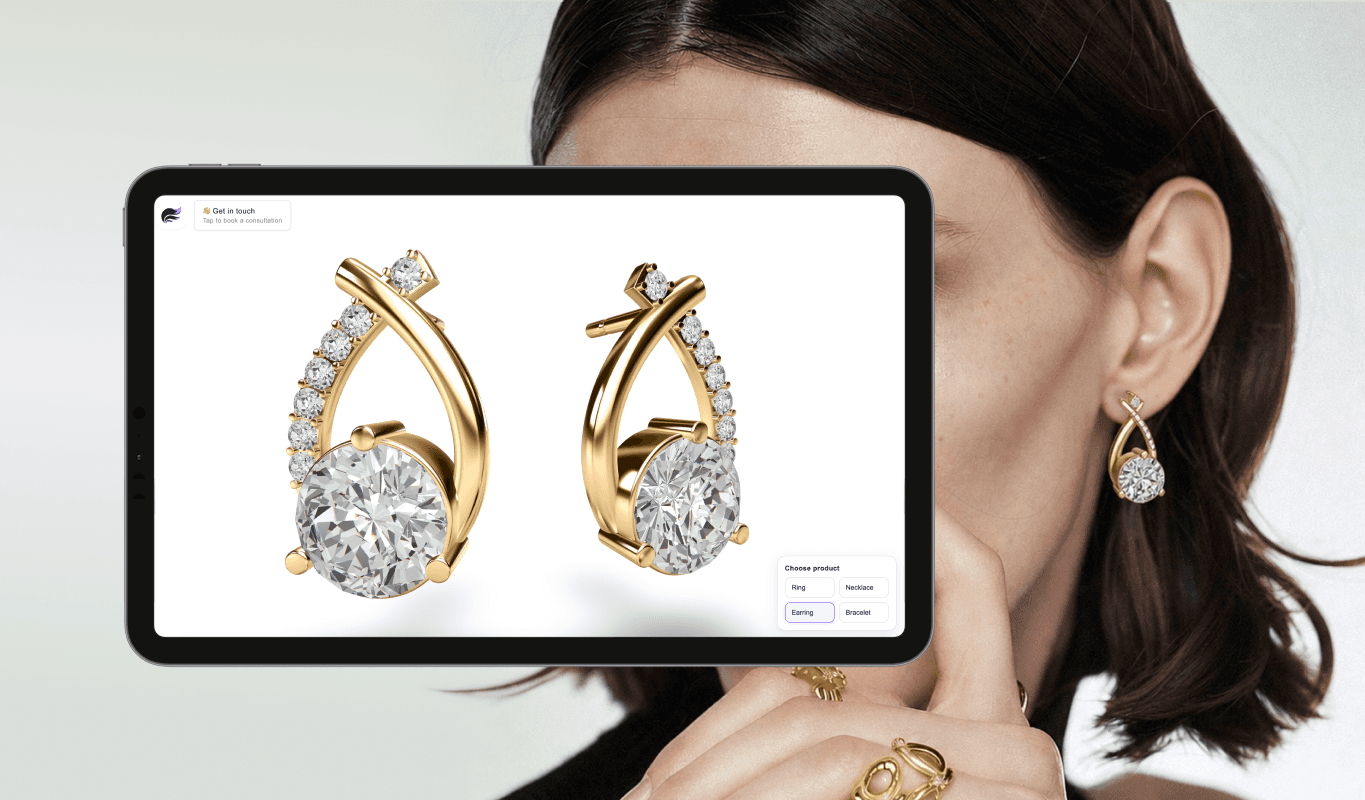
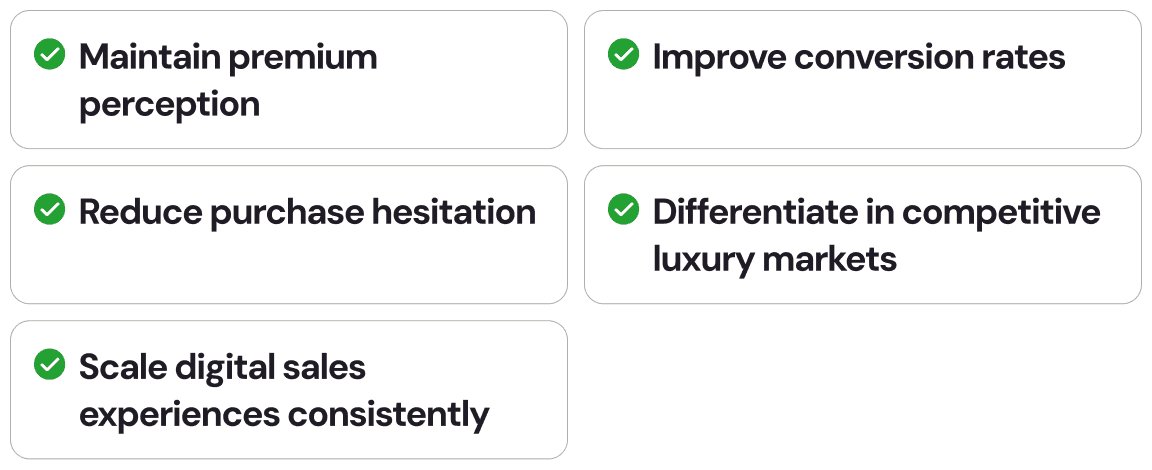
Over time, this becomes a strategic advantage. Brands that invest in advanced product visualization systems are better positioned to: